
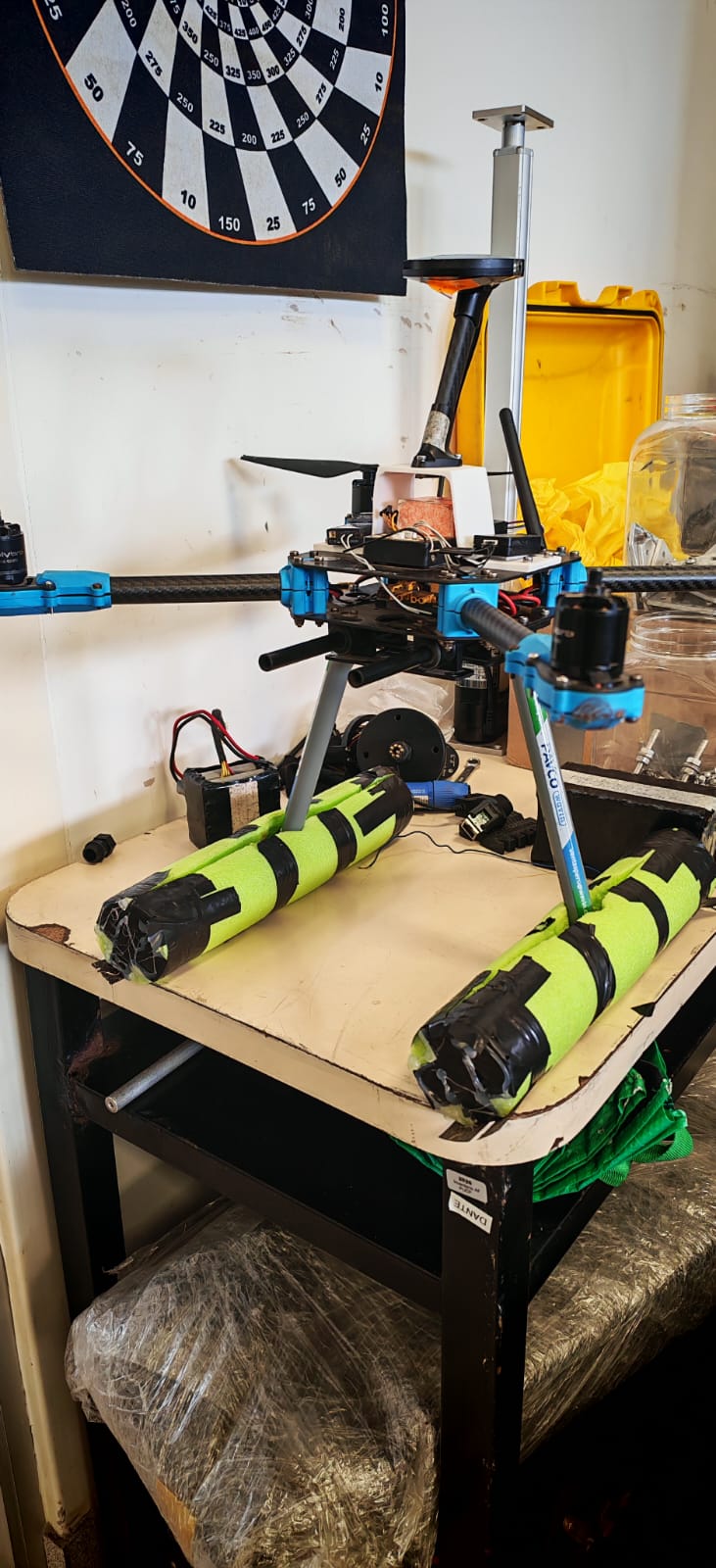
VEHICLE DESIGN & TESTING
[ Multi-Domain Autonomous Platforms Architecture & Field Trial Logs ]
50+ HRS
GAZEBO & VRX SIMULATION
15+ HRS
IN-WATER POOL TESTING
8+ HRS
AERIAL FLIGHT TRIALS
21+
LOGIC & SAFETY UNIT TESTS
USV — LIBERTAD
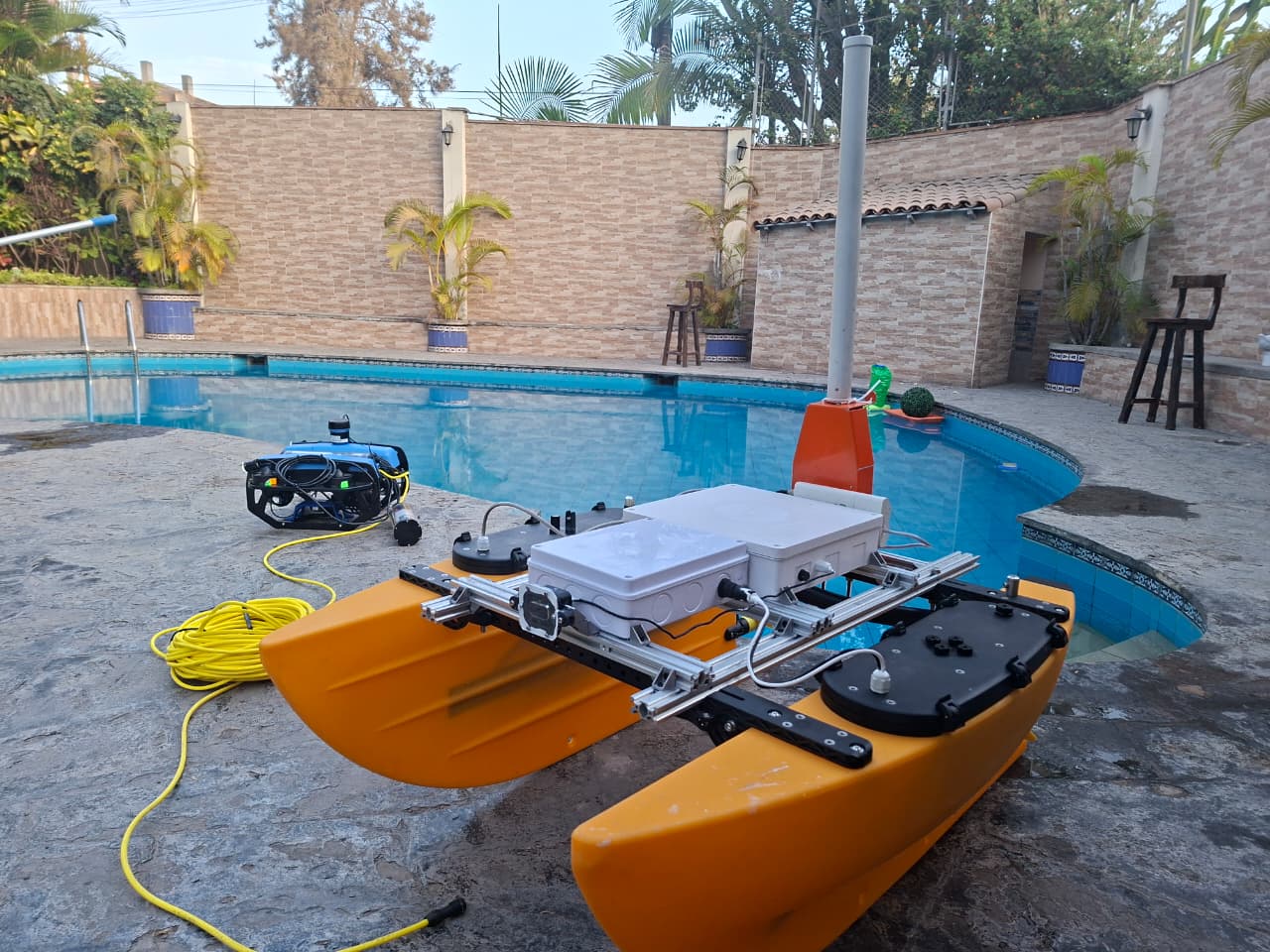
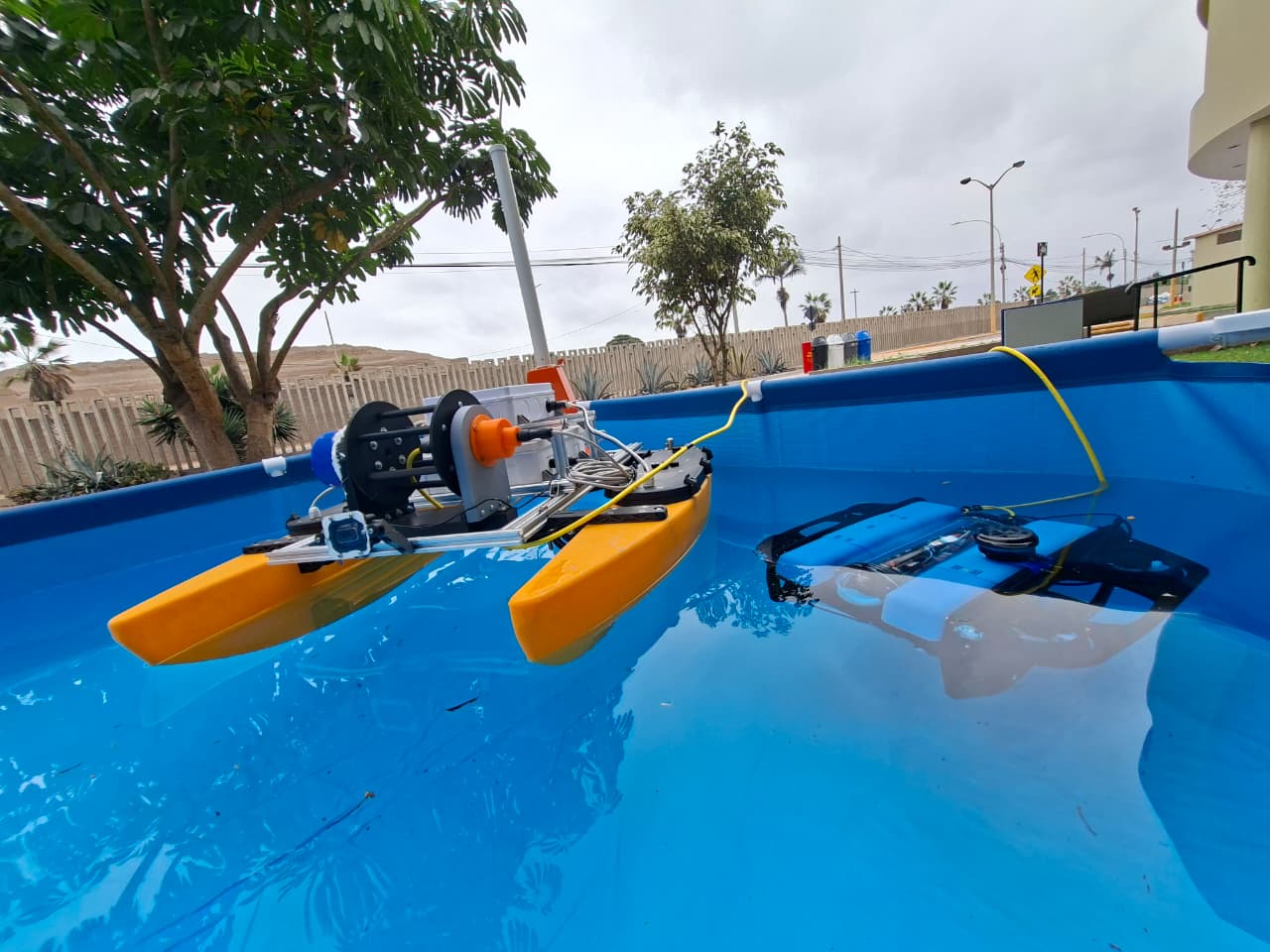
• Base Platform: Blue Robotics BlueBoat
• Autopilot: Navigator / ArduPilot 4.6.3 STABLE
• Software Stack: ROS 2 Humble (USV_ws)
• MAVLink Bridge: UDP 14553 (Read-only baseline)
• Sensors: Dual GPS-RTK, IMU, Stereo Vision Cameras
• Payloads: CAN MG6010 Motor Reel, Beacon System, SeaTrac X150 USBL Transceiver
UUV — HATUN YAKU
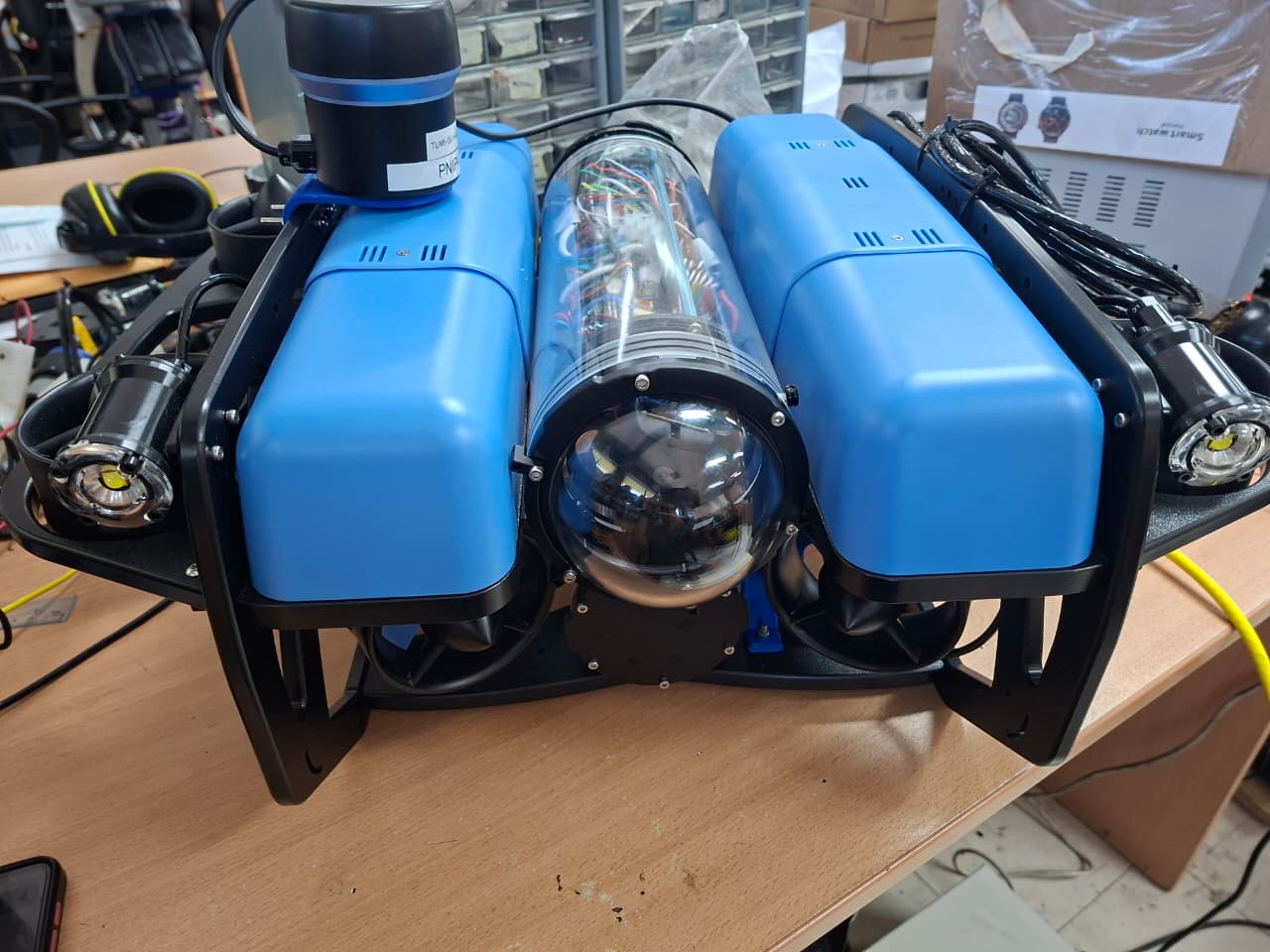
• Base Platform: Blue Robotics BlueROV2 Heavy
• Autopilot: Navigator / ArduSub 4.5.7
• Software Stack: Ubuntu 24.04 LTS, ROS 2 Jazzy (UUV_ws/real_ws)
• MAVLink Bridge: UDP 14552 (SYSID 1, COMPID 1)
• Sensors: Water Linked A50 DVL, Ping360 Sonar, Pressure Sensor, H.264 Camera (UDP 5600)
• Acoustics: SeaTrac X110 Beacon Transponder
UAV — URPI
• Base Platform: Holybro X500 V2 Quadcopter
• Autopilot: PX4 Autopilot / QGroundControl
• Software Stack: ROS 2 integration (UAV_ws)
• Comms: Futaba RC Radio & Telemetry Link
• Sensors: Downward Optical Camera, IMU, Barometer
• Mission: Aerial reconnaissance, AprilTag tracking & automated deck docking
1. Mechanical & Structural Design
• USV Structural Layout: Dual HDPE pontoon hull providing hydrodynamic stability in coastal chop. Custom aluminum mounting deck for payload integration, aerial landing pad, and SeaTrac USBL acoustic pole.
• UUV Frame & Waterproofing: Anodized aluminum heavy enclosure rated to 100m depth, custom 3D-printed brackets for Ping360 sonar and Water Linked A50 DVL bottom alignment.
• Trade-off Decision: Evaluated differential thrusters vs. vectored propulsion. Selected differential drive for USV simplicity and reliability, paired with full 6-DOF vectored thruster orientation on the UUV Heavy for precise stationary hold.
2. Electrical, Power & Safety Gates
• Power Distribution: Dedicated LiFePO4 battery banks powering propulsion and onboard computers separately to eliminate electrical noise.
• Voltage Hysteresis Protection: Motor power inferred via software thresholds. Propulsion enabled at ≥10V (11V in real launch), disabled at ≤5V (8V in real launch) with hysteresis buffer.
• Safety Gates & Deadman Watchdog: Hardware physical E-Stops paired with software MAVLink safety gates. Xbox controller Deadman button (RB) must be actively held; releasing RB returns motion to neutral. Command watchdog times out at 0.30s.
• Acoustic Feedback: Tones generated on confirmed autopilot ARM/DISARM transitions.
3. Software Architecture, Navigation & Acoustic Services
• ROS 2 Architecture: Modular workspace layout divided into USV_ws (Humble), UUV_ws (Jazzy on Ubuntu 24.04), UAV_ws, and SYSTEM_ws for shared services.
• Perception & Vision: YOLOv8 vision pipeline for real-time buoy detection and docking bay classification running on onboard hardware.
• Subsea Navigation: Water Linked A50 DVL integration feeding body velocity to ArduSub EKF for NED position estimation, paired with Ping360 imaging sonar point clouds (/ping360/points).
• Autonomous GUIDED Executor: Relative displacement controller executing target depth, relative moves, slewed yaw rates (10°/s), and local Home return. Automatic MANUAL takeover upon deadman release or link loss.
• SeaTrac USBL Acoustic Link: SeaTrac X150/X110 serial-to-UDP bridge running on port 15000 in SYSTEM_ws, providing environmental profiles for freshwater (0.0 ppt) and seawater (35.0 ppt) salinities.
Below is the historical log of testing events conducted at the PUCP pool facility in Lima and in SITL Gazebo simulation environments. All trials are backed by automated ROS bag recordings (record_pool.sh) capturing telemetry, EKF flags, and pressure data.
| Date & Location | Testing Objective | Observed Results | Corrective Action / Resolution |
|---|---|---|---|
| Aug 15, 2026 Piscina PUCP | UUV Stationary DVL & EKF telemetry lock test (60s disarmed capture). | EKF flags 167 & 39 observed. Local position recorded at (0.058, 0.162, 0.008) m with DVL bottom tracking. | Zeroed surface depth reference; calibrated pressure sensor offset in BlueOS. |
| Sep 08, 2026 Bench Test Lab | MAVLink Bridge & PyQt Dashboard integration check on Ubuntu 24.04 (Jazzy). | Confirmed H.264 video on UDP 5600, mode requests (MANUAL/ALT_HOLD), and RB deadman gate. | Added 0.3s camera tilt timeout and voltage hysteresis limits (10V ON / 5V OFF). |
| Sep 16, 2026 Piscina PUCP | GUIDED Sequence Executor & Safety Takeover validation. | Passed 21 logic unit tests. RB release or MANUAL selection successfully aborted sequence and zeroed velocity. | Implemented 0.4s bridge command timeout and 0.5s GUI watchdog for pool execution. |
| Sep 20, 2026 SITL Gazebo | SeaTrac USBL acoustic bridge & profile switching test. | Verified UDP 15000 serial bridge with X150. Environment profiles freshwater and seawater applied cleanly. | Guarded persistent flash save parameter (allow_persistent_save=false) to protect EEPROM. |
Simulation vs. Real-World Validation:
Our engineering methodology relies on Virtual RobotX (VRX) and Gazebo SITL to validate control loops, YOLOv8 vision node execution, and MAVLink message paths before deploying code to physical platforms in the pool.
Download Technical Design Report (TDR) & Proof of Readiness →
Pre-Flight / Wet Launch Checklist
1. Verify physical O-ring seals, penetrators, and tether integrity.
2. Confirm propulsion power voltage > 11V.
3. Boot MAVLink bridge in read-only mode (dashboard_readonly.launch.py) and verify heartbeat connection.
4. Inspect Water Linked A50 DVL communication in BlueOS.
5. Execute 60-second stationary zeroing; set surface pressure reference.
6. Confirm Xbox deadman button functionality (RB) before enabling command output.
Emergency & Failsafe Protocols
• Software Abort: Release Xbox RB button or click «MANUAL» in GUI to immediately zero setpoints and request hold mode.
• Hardware E-Stop: Physical red cut-off switch on USV deck immediately cuts main battery relay.
• Watchdog Timeout: Loss of telemetry for >0.4s triggers automatic velocity zeroing.
• Data Logging: Automated execution of record_pool.sh script saving all ROS bag topics for post-test analysis.
Access our Technical Design Report (TDR), Proof of Readiness (POR) documentation, and open-source ROS 2 code base.

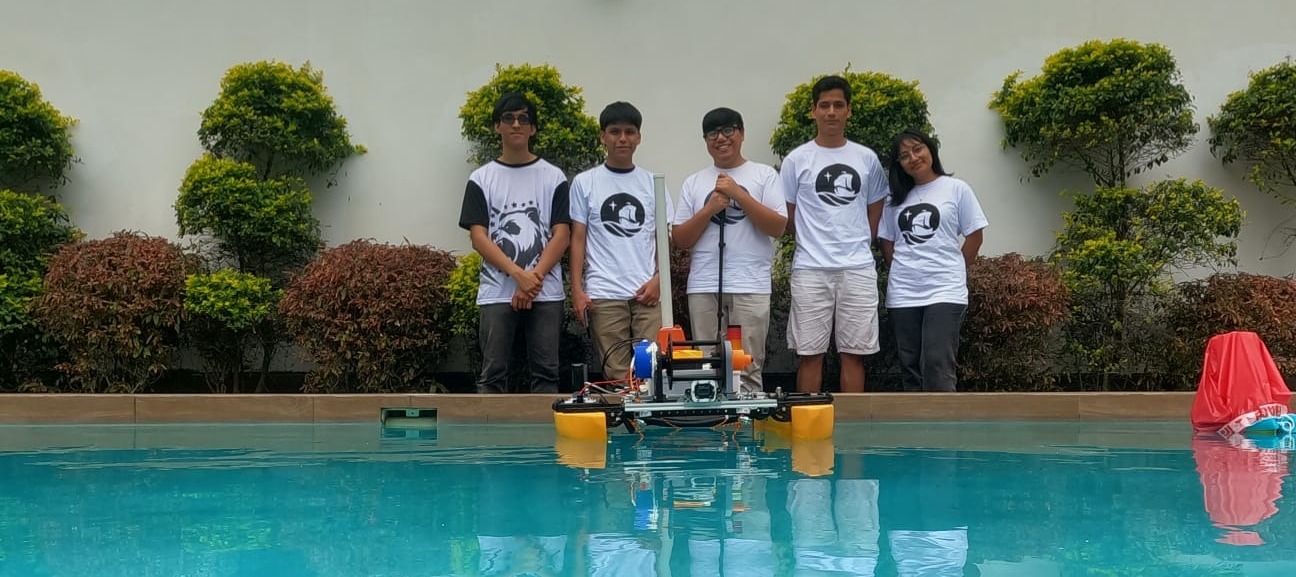
Team Tumi Robotics
Empowering PUCP students to build advanced autonomous systems for complex maritime environments.